
 by
by The 2026 Roland Garros tournament took a somber turn for Turkish sports fans on May 29 when Zeynep Sönmez, the nation’s top-ranked female player, was forced to retire from a high-stakes doubles match. The incident occurred during the second round of the women’s doubles draw, where Sönmez and her partner were fighting for a spot in the later stages of the prestigious clay-court Grand Slam. What was expected to be a competitive show of skill quickly turned into a medical emergency after a frightening collision with the court’s perimeter infrastructure.
Detailed Analysis of the On-Court Accident
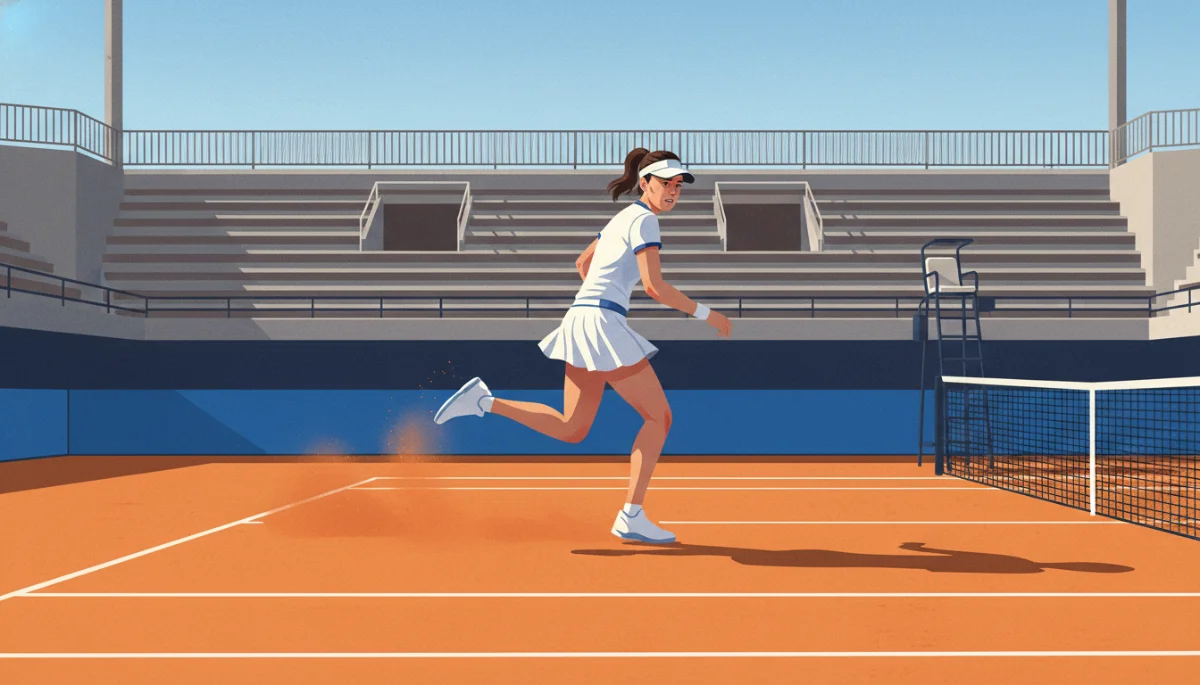
Zeynep Sönmez was competing alongside veteran German player Tatjana Maria against the formidable Ukrainian duo of Anhelina Kalinina and Dayana Yastremska. The atmosphere at the stadium was tense as the Ukrainian pair managed to secure an early 2-0 lead in the opening set. The momentum of the match shifted abruptly during a baseline exchange that forced Sönmez to defend deep in the court. As she sprinted backward to retrieve a powerful lob, the Turkish athlete was unable to decelerate in time to avoid the obstacles lining the back of the playing area.
Sönmez collided with a rigid advertising board located just beyond the baseline. The impact caused her to lose her footing and fall awkwardly onto the red clay. On-site physiotherapists and medical staff rushed to the scene immediately to assess the damage. Initial evaluations suggested significant distress in her calf and knee regions. Despite several minutes of medical attention and an attempt to stabilize the area, the pain proved too severe for Sönmez to continue. Consequently, the Sönmez-Maria pairing had to concede the match, allowing Kalinina and Yastremska to advance to the third round by default.
Persistent Safety Controversies at Roland Garros
This unfortunate event has reignited a fierce debate regarding player safety and the physical layout of the courts at Roland Garros. Critics have long argued that the proximity of advertising hoardings and rain tarpaulin covers to the active playing zone poses an unnecessary risk to athletes who move at extreme speeds. Sönmez is notably not the only victim of these conditions during the 2026 season. Only days prior to her accident, Belgian player Alexander Blockx suffered a similar fate when he tripped over a court-side obstruction, resulting in a severe ankle sprain that ended his tournament run.
The recurring nature of these injuries has led players and coaches to question why these boards cannot be moved further back or replaced with more forgiving materials. Many experts suggest that during dry conditions, the heavy rain covers should be stored in a way that does not impede the players’ slide or recovery movements. The French Tennis Federation is now facing increased pressure to review its court-side safety protocols to prevent such career-threatening accidents in the future.
Reviewing the 2026 Tournament Performance
Before the doubles mishap, Zeynep Sönmez had already completed her campaign in the singles category. Her journey in the solo draw was challenging, as she faced the highly experienced Daria Kasatkina in the opening round. Although Sönmez showed flashes of brilliance and pushed her opponent in several long rallies, she ultimately fell with a scoreline of 4-6, 4-4. This left the doubles category as her primary focus for the remainder of the fortnight in Paris.
| Competition Category | Opponent Pairing / Player | Match Result |
|---|---|---|
| Women’s Singles (R1) | Daria Kasatkina | Loss (4-6, 4-6) |
| Women’s Doubles (R1) | Monnet / Cascino | Win (6-2, 7-6) |
| Women’s Doubles (R2) | Kalinina / Yastremska | Retired (Injury) |
Her doubles performance with Tatjana Maria had actually started on a very high note. In their first-round encounter, they faced the French pair of Carole Monnet and Estelle Cascino. Sönmez and Maria displayed excellent chemistry, combining youthful aggression with veteran court craft to secure a straight-sets victory. Their departure from the tournament due to injury is particularly frustrating because they had demonstrated the potential to disrupt higher-seeded teams in the draw.
Recovery Paths and the Physicality of Modern Tennis
The modern game of tennis has become increasingly physical, demanding that players perform explosive movements and sudden stops on surfaces that can be unpredictable. When an athlete like Sönmez suffers a collision-based injury, the recovery process is often complex. Calf and knee injuries are especially delicate because they are central to a player’s ability to generate power and maintain balance. The rehabilitation period will likely involve intensive physical therapy, rest to reduce inflammation, and a gradual return to weight-bearing exercises.
For a player who serves as the face of Turkish tennis, the stakes for a full recovery are incredibly high. Sönmez has been instrumental in raising the profile of the sport in her home country, and her presence in Grand Slam main draws is a source of national pride. The tennis community now awaits an official medical bulletin to determine the exact length of her absence from the WTA tour. If the injury involves ligament damage, she could be sidelined for several months, potentially missing the upcoming grass-court season and the start of the hard-court swing in North America.
Final Thoughts on the 2026 French Open Campaign
While the 2026 French Open ended in disappointment for Zeynep Sönmez, her resilience on the court continues to inspire young athletes. The injury serves as a stark reminder of the fine line professional athletes walk between peak performance and physical vulnerability. As the tennis world moves forward, the focus remains on ensuring that tournament environments are as safe as possible for the competitors. For Sönmez, the priority is now a healthy recovery so she can return to the world stage and continue her ascent in the global rankings. Fans and analysts alike remain hopeful that this setback is merely a temporary hurdle in what has otherwise been a promising and historic career for the Turkish star.